
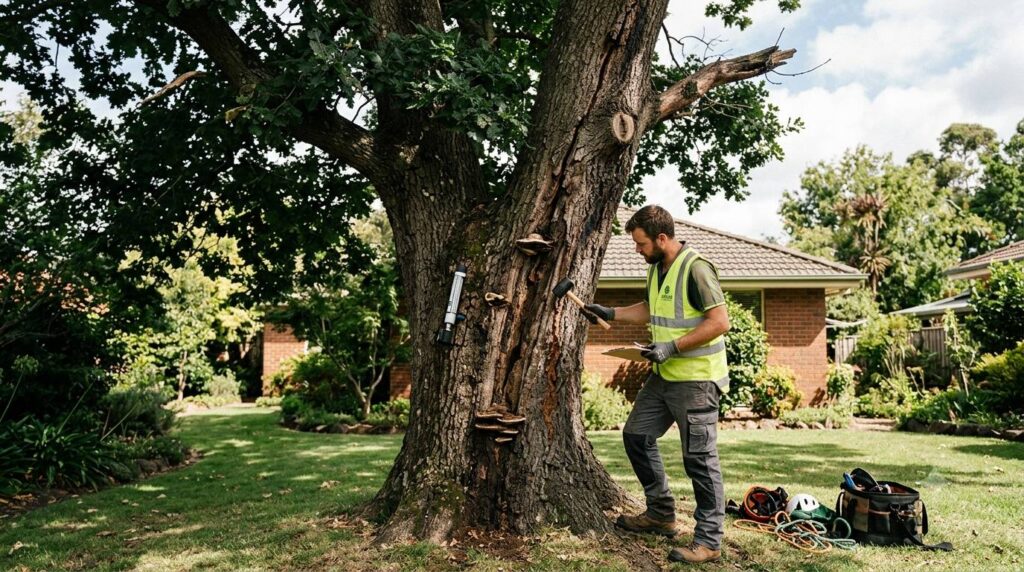

Trees are an important part of gardens, streets, and public spaces across Essex, but they don’t always make it obvious when something is wrong. A tree can look healthy from the ground while developing dead branches, structural problems, or excessive growth that may eventually become a concern.
Knowing what to look for can help property owners decide when routine maintenance is enough and when it’s time to bring in a qualified tree professional.
Start With The Tree’s Overall Condition
One of the easiest ways to monitor a tree is to look for changes. Dead or hanging branches, cracked limbs, unusual leaning, damaged bark or significant areas of decay are all cause for closer inspection.
Seasonal changes matter too. Some trees naturally lose branches or leaves at certain times of year, so it’s important not to assume every change indicates a serious problem.
The tree’s surroundings should also be considered. A branch overhanging a driveway, building, footpath, or garden seating area may require more attention than an equivalent branch in an open field.
If a tree has become particularly dense or its branches are extending significantly beyond their intended space, professional maintenance may be appropriate. Services such as crown reductions can reduce the overall size and spread of a tree, while retaining its general shape and structure, when the work is appropriate for the species, and the tree itself.
Why Tree Size And Location Matter
Tree work isn’t simply about cutting back whatever appears to be growing too far. Different species respond differently to pruning, and removing too much growth can create further problems. A professional assessment should take into account the age, species, condition, location, and existing structure or the tree. It should also consider why pruning is being proposed in the first place.
For example, a mature tree may need its crown managed because branches are becoming too close to building. Or, it might be considered to reduce excessive spread. The objective should be appropriate maintenance, not just making the tree as small as possible.
Regular Maintenance Can Prevent Bigger Problems
Tree care doesn’t always have to be reactive. Regular inspections can help identify developing issues before they become more complicated or expensive to address.
For homeowners, this might mean checking trees periodically and contacting a professional when something changes. For landlords, commercial property owners, and organisations responsible for larger sites, keeping records of inspections and maintenance provides a more structured approach.
It’s also important to remember that pruning isn’t necessarily required simply because a tree has grown. Trees provide valuable shade, habitat, and they’re nice to look at, so any work that gets done should have a clear purpose.
If professional tree work is required, make sure that you’re looking for a suitably qualified and insured tree-care company with experience working on trees similar to yours. Ask what work is being recommended and why, rather than just agreeing. Remember, a little attention at the right time can go a long way towards keeping trees safe, healthy, and well suited to the space they are in.