
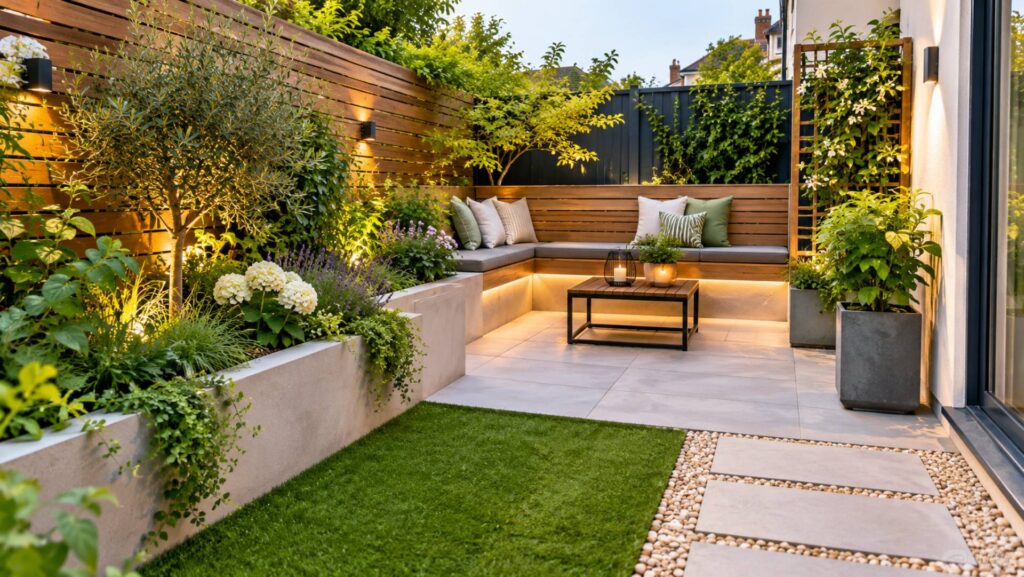

A small garden does not have to feel cramped or uninspiring. With thoughtful planning, the right materials and a carefully selected planting scheme, even a compact outdoor area can become stylish, practical and inviting. Modern garden landscaping focuses on clean lines, smart use of space and simple features that make the garden feel larger and more organised.
Whether you have a narrow courtyard, a small back garden or a compact urban outdoor space, there are plenty of ways to create an attractive landscape without overcrowding it.
Use Simple, Clean Lines
Modern landscaping often works best when the design is simple. Instead of filling every available space with plants and decorations, create defined areas using straight lines, geometric shapes and carefully positioned features.
Large rectangular paving slabs can make a small garden feel more spacious, while narrow borders can provide structure without taking up too much room. Keeping the overall layout uncluttered also makes the garden easier to maintain.
Choose Multi-Functional Garden Features
When space is limited, every feature should serve a purpose. Built-in seating, for example, can provide somewhere to relax while also incorporating storage underneath.
Raised beds can combine planting with attractive structural elements, while a compact patio can work as both a dining and entertaining area. Choosing features that perform more than one function helps you get greater value from a small garden.
Make the Most of Vertical Space
One of the easiest ways to add greenery without sacrificing valuable floor space is to think vertically.
Climbing plants can be trained against walls, fences or trellises to create attractive green screens. Vertical planters and wall-mounted containers can also introduce colour and texture while leaving the ground relatively open.
Consider plants such as climbing roses, jasmine or clematis where suitable for the growing conditions. A vertical garden can also provide additional privacy in overlooked outdoor spaces.
Select Plants Carefully
A common mistake in small garden landscaping is choosing too many different plants. A limited planting palette often creates a more sophisticated and modern appearance.
Choose plants based on the amount of sunlight, soil conditions and available space. Evergreen shrubs can provide year-round structure, while ornamental grasses and seasonal flowers can add movement and colour.
It is also worth considering the mature size of every plant. A plant that looks small at the garden centre may eventually become too large for a compact border.
Create Zones Within the Garden
Dividing a small garden into different zones can make it feel more functional. You might create one area for dining, another for planting and a small corner for relaxing.
Different materials can subtly separate these spaces. For example, paving can define a seating area while gravel or planting can mark another section. The key is to create distinct zones without making the garden feel fragmented.
Use Mirrors and Light Colours
Mirrors can be useful in enclosed gardens because they create the impression of additional depth. Positioning a mirror against a suitable wall or fence can visually extend the space.
Light-coloured paving, walls and garden furniture can also help reflect natural light and create a brighter atmosphere. Avoid using too many dark or heavy materials if the garden already receives limited sunlight.
Add Compact Outdoor Lighting
Good lighting can transform a small garden after sunset. Instead of installing numerous large fixtures, use subtle lighting to highlight pathways, planting areas, steps or architectural features.
Wall lights, recessed lights and small spotlights can create a warm atmosphere while keeping the design visually clean. Solar lights can also be useful for simple pathway illumination where appropriate.
Consider Built-In Seating
Freestanding furniture can quickly make a small garden feel crowded. Built-in benches are a practical alternative because they can be designed to fit the exact dimensions of the space.
A built-in bench along a boundary wall can leave the centre of the garden open while providing comfortable seating. Add cushions or outdoor textiles to make the area more inviting.
Keep Maintenance in Mind
A modern garden should not only look good but also be practical to maintain. Too many delicate plants, complicated borders or high-maintenance features can make a small garden feel like a constant chore.
Consider using hardy plants, simple paving and clearly defined planting areas. Mulching borders can also help retain moisture and reduce weed growth.
Frequently Asked Questions
How can I make a small garden look bigger?
Use simple layouts, consistent paving, vertical planting and light-coloured materials. Keeping the design uncluttered can also create a stronger sense of space.
What plants are best for small gardens?
The best plants depend on sunlight, soil and climate, but compact shrubs, ornamental grasses, climbers and carefully selected perennials can work well. Always check the plant’s mature size before planting.
Is paving a good option for a small garden?
Yes. Large-format paving can reduce visual clutter and create a clean, spacious appearance. Choose a layout that works with the garden’s proportions rather than using too many different materials.
How can I add privacy without making my garden feel smaller?
Use vertical planting, trellises, climbers or narrow screening features. These can provide privacy while using less floor space than bulky structures.
Conclusion
Small gardens can offer just as much style and functionality as larger outdoor spaces when the design is carefully considered. Clean lines, vertical planting, multi-purpose features, thoughtful lighting and a simple planting scheme can help create a modern landscape without overwhelming the available space.
The most successful approach is to focus on what you genuinely need from the garden and make every element work for the space. With the right balance of planting, hard landscaping and practical features, even the smallest garden can become an attractive and enjoyable extension of the home.